Showing posts with label writing. Show all posts

Wednesday, October 24, 2012

Using Ordinary Notebook Paper Day 8: First Cousin to Notebook Paper

Welcome to iHN's Hopscotch at Blog, She Wrote! My topic for the 10 day series is Ten Ways to Use Ordinary Notebook Paper. Thank you for joining me. Please take a moment to subscribe, so you don't miss out- you can follow, subscribe by email or RSS feed (just look to the right!) and follow Blog, She Wrote on Facebook, Twitter or Pinterest. I'd love it if you'd stay connected and visit again!


Today's notebook paper topic is: First Cousin of Notebook Paper- Primary Paper. I debated a bit on whether to include two closely related relatives to ordinary notebook paper because they may not be considered so ordinary. But, I simply could not leave them out! I'll feature one today and one tomorrow.

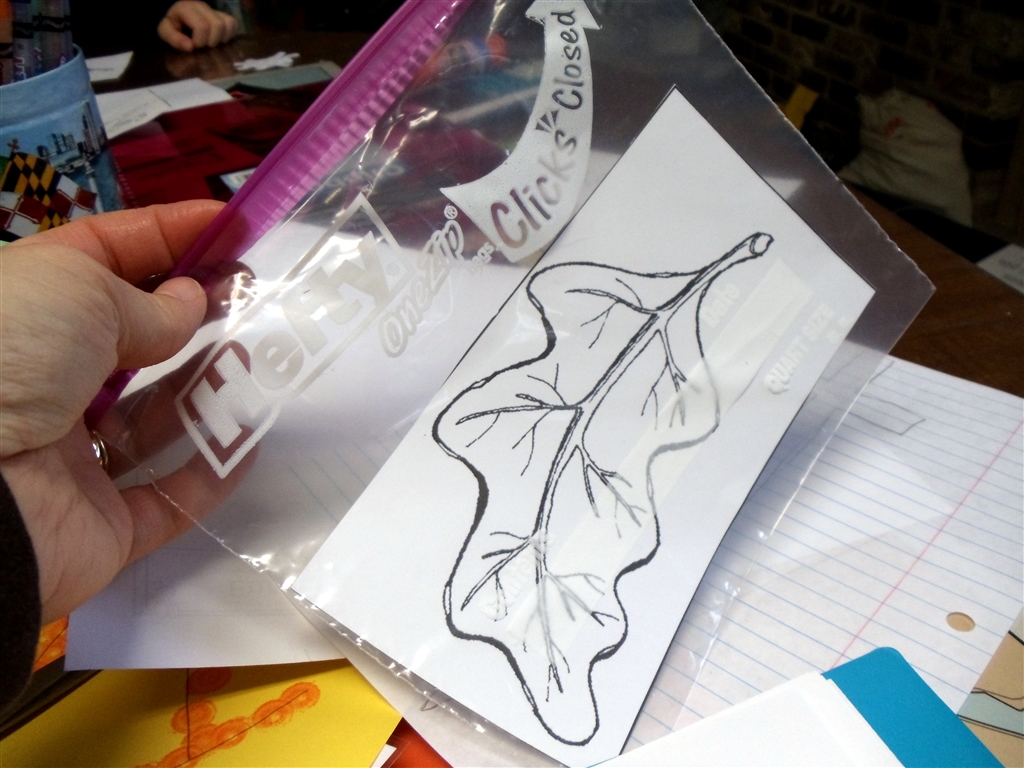
Primary paper is a MUST for younger students and my favorite of all time is the paper printed from Startwrite software. In fact, I love it so much it's one of the very few products for which I am an affiliate. It is so versatile and I use it everyday. It's the ordinary notebook paper I use with my second grader and I typically use it through third grade. Before you think your kids are too old for it, consider using it for cursive writing for your older kids.


Startwrite
I use the Startwrite primary paper in a variety of ways. Here are a few:
  • Copywork- With the software I can type out any copywork I'd like. It can be traced on dotted line  letters or copied. I can type it out in solid type (of varying fonts) and have my student copy it on the following lines. In the picture above, I made a page of copywork from our current FIAR story- Pumpkin Runner.
  • Plain half sheets of paper- I can make copywork or just plain paper in half sheet for so my students can draw pictures above it. This works splendidly with programs like Draw, Write, Now.
  • Plain whole sheets of paper- As they get older and can write longer but still need bigger lines, this is very useful. 
  • Notebooking Paper- You can do full or half sheets and add pictures or glue pictures or elements to the page and still have lined paper for younger students to write on. This is my chief complaint lapbooks. They usually do not account for the less refined fine motor skills of younger children.
  • Narration- I love to make copywork from my students' narration to me. Simply type as they narrate to you and when you are finished you have a copywork sheet made from their own words.
  • Notebooks/Assignment Books- I can use my ProClick to bind these papers into a spiral notebook for younger kids. I think I'll do a bonus Hopscotch Day this week to remind readers of how we do assignment books here. Of course it uses plain notebook paper!

There are many ways to use primary paper and in particular Startwrite paper in your homeschool. The software is a great investment and will give your young students an skill appropriate way to complete notebooking assignments without frustration. 

In fact, this is the only software I used for handwriting after my first child did a more formal program. You can choose letters that have arrows for letter formation and make nice instructional and practice sheets and I love that I can do that with my child's own words or the text from the things they are already studying.

Tomorrow I'll share another close cousin of notebook paper. Thanks for the grace on the delay of Day 8's post!

Thanks for joining me!

______________________________________________________

Please visit the other bloggers participating in iHN's Hopscotch over the next two weeks. While you are taking a look at the other Hopscotchers, check out the Pin It to Win It giveaways sponsored by Prufrock Press.
______________________________________________________


Tuesday, October 23, 2012

Using Ordinary Notebook Paper Day 7: Dictation & Grammar

 Welcome to iHN's Hopscotch at Blog, She Wrote! My topic for the 10 day series is Ten Ways to Use Ordinary Notebook Paper. Thank you for joining me. Please take a moment to subscribe, so you don't miss out- you can follow, subscribe by email or RSS feed (just look to the right!) and follow Blog, She Wrote on Facebook, Twitter or Pinterest. I'd love it if you'd stay connected and visit again!


Today's notebook paper topic is: Dictation. Many of you may be familiar with using dictation with students to improve their writing skills. Using copywork and then dictation for language arts is a natural extension of our literature unit studies. Using well written books is a great way to introduce children to grammar and the next best tool for the job is your well stocked pile of notebook paper!


I choose a few sentences or more typically a paragraph from a book we are reading and I read it aloud to my student. His job is to write down the sentence as he hears it and then I add a grammar exercise to it on the second day.

It may take some time for your student to catch on to listening and writing. I don't mind repeating myself as we build this skill, but eventually I will not repeat the sentence and once we've finished, I edit the paragraph. The following day I add some grammar questions to call out some skills.

I choose the paragraph based on what my student needs work on- I can always find a great example of the use of a comma or possessive nouns when I need one.

Once we go over the grammar questions and activities, I have the student rewrite the paragraph with any corrections. It's a nice way to tidy up the lesson.

If you'd like to know what resources I use as a reference tool for grammar, please see the list in this post called Thoughts on Grammar. 

Thanks for joining me!

______________________________________________________

Please visit the other bloggers participating in iHN's Hopscotch over the next two weeks. While you are taking a look at the other Hopscotchers, check out the Pin It to Win It giveaways sponsored by Prufrock Press.
______________________________________________________


Monday, October 22, 2012

Using Ordinary Notebook Paper Day 6: Writing with Word Cards

Welcome to iHN's Hopscotch at Blog, She Wrote! My topic for the 10 day series is Ten Ways to Use Ordinary Notebook Paper. Thank you for joining me. Please take a moment to subscribe, so you don't miss out- you can follow, subscribe by email or RSS feed (just look to the right!) and follow Blog, She Wrote on Facebook, Twitter or Pinterest. I'd love it if you'd stay connected and visit again!


Today's notebook paper topic is: Writing with Word Cards. This is a little tidbit I've shared before within another blog post and I thought it would be worth mentioning again all on its own. I started using this with my then younger reluctant writer daughter and it still works today with her and with her younger brothers.


You can use this technique with creative or more technical writing- with a curriculum focus or free writing/something you put together as a writing prompt. In this example, we used Story Starters by Karen Andreola as our inspiration for writing. Actually, Karen provides a lot of writing helps already within her text, but this using word cards is just one more tool in my writing toolbox for my kids. When they are younger I like it for picking out key items they need to include in their writing. As they get older I still like them to help my kids focus on word variety.

The downside is that a set of word cards may sort of lead your kids down one path vs another depending on the words you provide. In this example, I added the word storm to the list though none occurs in the prompt- so it's definitely a leading sort of word.


How does it work? I provide the cards in a library pocket based on the prompt. The cards have words on them that must occur somewhere in the student's story ending. You can have a student look at all the cards and begin writing or you can have them choose a card one by one (from inside the pocket) and add a sentence to their story using that word- this works pretty well for reluctant writers.


Of course all the self-editing and editing parts of the process remain the same, but the word cards give some more framework for the written response. It also adds a kinesthetic approach to writing if only in a small way. 


Again, this is a quick and thorough way to enter the writing process for a student and provides another way to coach your student on his writing. You can even make the word cards from notebook paper, but in this case I used index cards. Notebook paper is a flexible tool to use with word cards. I usually have my 5th grader skip lines and write on every other line- another way to modify the use of wide ruled paper with younger students. Skipping lines allows their writing to be spread out more and provides more room for editing.


I hope you enjoyed this quick writing idea using word cards and notebook paper. Join me tomorrow for another great way to use ordinary notebook paper in your homeschool!


______________________________________________________

Please visit the other bloggers participating in iHN's Hopscotch over the next two weeks. While you are taking a look at the other Hopscotchers, check out the Pin It to Win It giveaways sponsored by Prufrock Press.
______________________________________________________


Friday, October 19, 2012

Using Ordinary Notebook Paper Day 5: The Dictionary Quest

Welcome to iHN's Hopscotch at Blog, She Wrote! My topic for the 10 day series is Ten Ways to Use Ordinary Notebook Paper. Thank you for joining me. Please take a moment to subscribe, so you don't miss out- you can follow, subscribe by email or RSS feed (just look to the right!) and follow Blog, She Wrote on Facebook, Twitter or Pinterest. I'd love it if you'd stay connected and visit again!
 

Today's notebook paper topic is: The Dictionary Quest. For this one not only are we going old school on the notebook paper, but we are going old school on the dictionary as well. For this activity you'll need a good old fashioned print dictionary. The kind with those helpful guide words at the top of each page. The kind that you lose yourself in for a few minutes when you are flipping to and from the word you are looking up- as you see another word that catches your eye. Remember those? Remember when there was some browsing that went along with finding a word in the dictionary?

This idea came from an issue of Homeschool Enrichment Magazine- the July/August 2008 issue and the article was entitled, "Open Your Dictionary! The Educational Value of Your Most Common Reference Book" by Deanna Blackburn. She challenged her readers to see the dictionary as a useful resource "in the great toolbox of learning". She makes compelling arguments for old fashioned dictionary use even mentioning that online tools are sufficient for those of us who grew our base vocabularies prior to the online age. How about that?


Using the article I read as a model, I can choose any page and any word. This afternoon I opened up the dictionary and looked for a page with a picture and happened upon a camel. I chose the quest word to be "cameo". It's a great word with multiple meanings and the words that accompany it on the page are fun to explore. My kids have the chance to learn more about camels- they can tell me how many kinds there are, where they are from, and a few features which distinguish them from each other.

In keeping with our theme of action, all it takes is a dictionary at hand and a quick peek inside to pull out some words to explore.  Once you've chosen a word, you can ask for its meanings, have them list the guide words on the page, tell any alternative spellings for the word, and even identify illustrations found on the same page or nearby. You can find cross-referenced words and I love to send my kids on a chase with words found in a thesaurus to see if a word they have gotten from a thesaurus has the same meaning as the word they are replacing or if it is meant for another purpose. And no need for any special format! Just grab that piece of notebook paper, jot it down, and hand out the assignment!

The possibilities are endless, but it all comes down to getting kids to fall in love with words. I have a child who does not care for writing a whole lot, but she loves words and anything I assign to her with a challenge to use words, find words, or explore the subtleties of the different meanings of similar words...well she adores.

We often take for granted all the experience we've had with a print dictionary, but our children are not as inclined to make that choice with such handy electronic resources available. Just think of all the extra tidbits they miss out on when they don't flip through a thick book to find a word! When you need something for the next long trip, drop a dictionary- or two into the backseat and hold a treasure hunt!

One last thing, the dictionary you choose makes a difference. Having used this reference more than a few times already this year, I have seen huge blunders in definitions between two Webster's editions- one for "school" and the collegiate version. Make sure you have a good dictionary!

Stay tuned for some more word fun on notebook paper again next week...

Thanks for joining me!

 ______________________________________________________

Please visit the other bloggers participating in iHN's Hopscotch over the next two weeks. While you are taking a look at the other Hopscotchers, check out the Pin It to Win It giveaways sponsored by Prufrock Press.
______________________________________________________


Wednesday, September 19, 2012

Five Words That Describe Summer

Here at Blog, She Wrote we are still getting back into the groove of our learning routine. Preparing a house to sell and moving a homeschooling family of six to a new home takes a lot of energy! We had 27 book boxes from our former school space alone- and many more from other corners of the house. It turns out that it takes a lot of time to settle back down in a new home as well and aside from a few stray boxes in our new learning space, pictures on the walls, and the office/studio not being rebuilt and unpacked, we are about finished. Finally!

So, our attention has turned to our fall schedule and turning four children who have enjoyed much academic freedom over the last three months back around to focus on their education. We haven't turned on a dime, but we are moving steadily in that direction!

Yesterday, I used my handy smartphone to grab an idea from In Our Write Minds. I have Kim's blog bookmarked in my phone's browser and I knew I'd seen some writing prompt ideas. 12 Back-to-School Writing Prompts was just the thing to have my three younger kids work on some writing in the afternoon.


I gave them each a different assignment (sometimes modifying it) and it went beautifully. R12 had to choose five words that described her summer and tell why. I told her she could use the thesaurus to play with her words and she gladly accepted the challenge. She found words like "felicity" and said she had a pleasurable summer. And "interregnum" because summer is a vacation from school and because that was such a cool word.

I10 had to tell about something he'd done over the summer that he'd never done before. He chose to tell about building the lean to that he's working on in the backyard. This was after mulling over "moving" and he decided although that was fantastic, it wasn't fun enough.


J7 had to pick just three words that described his summer and write them down. He also had to draw a picture to match his choices. Moving made his list along with "scary" and "hot". Scary points to his recent experience with yellow jackets on his face. Standing still as he'd been told, he let them get a little too close. Thankfully, he did not get stung, but he is sufficiently freaked out. He now knows there is a limit to standing still! His picture is a stick J with his tongue sticking out (denoting how hot he is), with a yellow jacket near his face all the while standing next to a UHaul box.

Simple exercises that can turn into a great assignments. That's one of the best things about homeschooling.

Monday, October 17, 2011

Cursive Writing

Anyone out there still teaching cursive writing? It seems like there is some controversy over cursive handwriting instruction in public schools. Educators have some definite opinions on the topic. At our house, I think it's important to be able to read cursive and I do teach the kids to write it, but not at a young age. E13 can write in cursive but prefers to use print. R11 luvs anything artsy and frilly and cursive writing is no exception. We started in 4th grade, but it does not receive super high priority. Now in 6th she is using Draw and Write through History as a copywork source for cursive. She really enjoys it and when she really gets the hang of it I bet it will be her primary form of writing.

We have several volumes to match our studies.

This sort of shows a page view from the book.

Here's a close up of her handwriting.
We started out with more instructional practice paper from StartWrite, but now she is using wide ruled loose leaf and I think it's going reasonably well. I have used and reviewed several handwriting programs and I have not been diligent with most of them. Practice makes perfect and all of my children can write. I love to just provide the appropriate paper and we make air letters with our fingers and go for it.

Monday, April 25, 2011

WriteShop Junior E- Beta Testing

Many of you know, we do not use a formal writing program with our children. I have always done copywork and dictation with our unit studies and coached my kids on a lot of the writing process through lots of different types of writing over the years. We have been very consistent with it and it has worked very well.

In the fall, I listened to an mp3 of Kim Kautzer at WriteShop and began reading her blog, In Our Write Minds. I found a lot of great tips there and began using some of her suggestions. I looked at WriteShop and thought if I were to write a curriculum for writing, it would look a lot like this. So, when she put out the call through a newsletter that she was looking for folks to beta test a 5th grade program, I jumped at the chance to try it out. We've been using WriteShop Junior Level E since February. It's been a great time! I use it with my three oldest kids though it is designed for 5th grade. I think it's right on target and I'm very happy to report that the coaching I've been doing all these years has paid off! Even my 3rd grader using a 5th grade program is doing very well without missing a beat.

This week is a concrete poem- so the kids got to choose a shape.

And paste the words in their shape to make a poem.

We do a modeling of the assignment together. This is our poem on The Sword.

Each lesson topic lasts two weeks and is very predictable in terms of the order of the activities. My hands on girl loves the variety and she has been producing a lot of great writing. I already mentioned that I love the editing process. It has given me more concrete ideas for improving their self-editing skills which has made a difference.

I am more convinced than ever that a formal program of writing and grammar has not been necessary! I'm not sure what's in store after this semester. I will likely return to coaching and daily writing with our younger boys. E12 will definitely be using the One Year Adventure Novel next year in 8th grade (with a return to it in 10th or 11th grade). I'm not certain what R10 will do for 6th grade next year. I do own WriteShop I and we will likely give that a go. One thing I love about WriteShop is that it breaks down the writing process without leaving behind the authenticity. It is very easy to relate the types of writing we learn to very familiar books that we have experienced together. It has been a great experience to work with Kim and her WriteShop materials. I'm sure you will hear more about our process before we finish up in June. We are about half way through this beta program at the moment.